

















We live in a highly sexualized world. We’re constantly bombarded with media that implies having lots of sex is desirable. But when is a relationship with sex unhealthy? A sex addiction isn’t just wanting to have regular sex; it’s a mental health disorder that negatively affects your daily routines, relationships, and overall well-being.
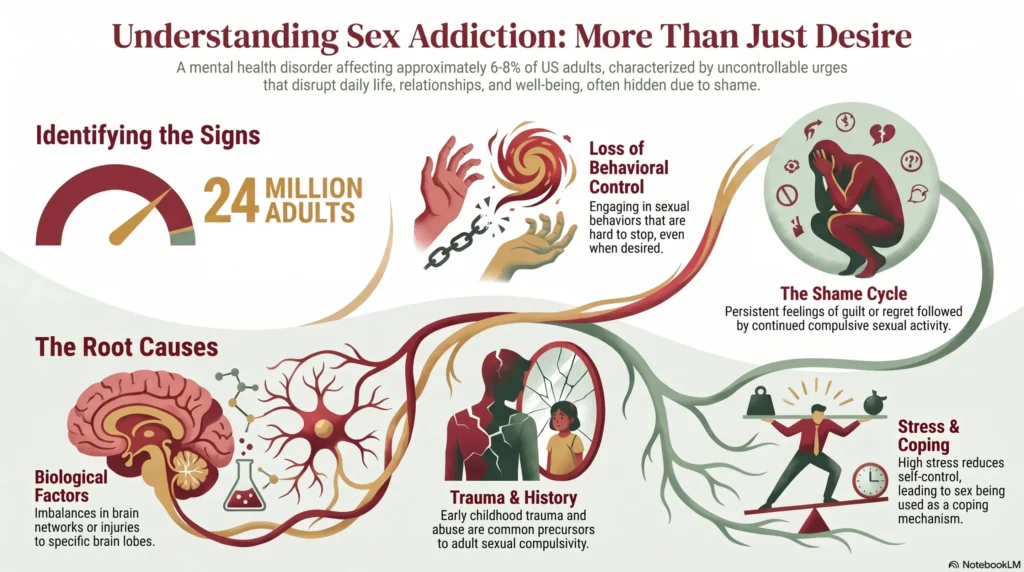
Up to 24 million adults in the US meet the criteria for sex addiction; that’s around 6-8% of the adult population [1]. Sex addiction isn’t always obvious; signs can be subtle, and many people don’t acknowledge or seek help for them out of shame.
Sex addiction is real and has real consequences. Let’s break down what sex addiction is and isn’t and how you can seek help.
What Is Sex Addiction?
Sex addiction is characterized by sexual urges and behaviors that are hard to control and that negatively affect your daily life. It can cause problems in your romantic relationships, in your finances, and with your work or study. It’s sometimes called sexual compulsive behavior or hypersexuality.
Signs of sex addiction include:
- Regular, persistent thoughts of sex that make it hard to focus throughout the day
- Sexual behaviors that are hard to stop, even if you want to
- Watching pornography regularly or in inappropriate scenarios
- Masturbating regularly
- Increasing how often, and how intense, sexual activities are
- Feeling guilt, shame or regret after sexual behaviors, but continuing to do them
- Feeling stress when reducing or stopping sexual activities
In extreme cases, sex addiction can lead to sexual offenses.
What Causes Sex Addiction?
Several factors can increase the likelihood of developing a sex addiction. There’s no single cause, but researchers believe it can be a mix of the following:
Brain chemicals: Research suggests that chemical networks in the brain may increase the chances of having a sex addiction [2].
Brain injuries: Damage to the frontal, right hemispheric, and temporal lobes has been associated with hypersexuality [3].
Ongoing exposure to sexual content (explicit or not): The release of dopamine, which impacts the brain regions that regulate ‘wanting’, happens with both conscious and subconscious processing of sexual stimuli [4].
Coping mechanism: High stress can reduce self-control, which increases the odds of sexual activity [5].
Medication: Certain substances (prescription and illegal) can affect neurotransmitter pathways involved with pleasure and reward and increase hypersexuality.
Who Is Affected by Sex Addiction?
Anyone can develop a sex addiction. However, research shows that higher rates of men suffer from sex addiction than women do. Personality traits play a role, too: neuroticism has been associated with higher scores of sex addiction among men [6].
Trauma is also connected to sex addiction. Early experiences of trauma are common among men who have been diagnosed with a sex addiction [7]. In particular, sexual abuse in childhood has been connected to problematic pornography use [8].
But sex addiction doesn’t only impact the person with it. Partners, family members, and colleagues may all feel the ripple effects of a sex addiction, whether through a sense of detachment, neglect, or a loss of productivity.
Common Misconceptions Around Sex Addiction
There are a number of misconceptions around sex addiction that not only prevent people from getting an accurate diagnosis and treatment but can also fuel the sense of shame that prevents people from seeking help.
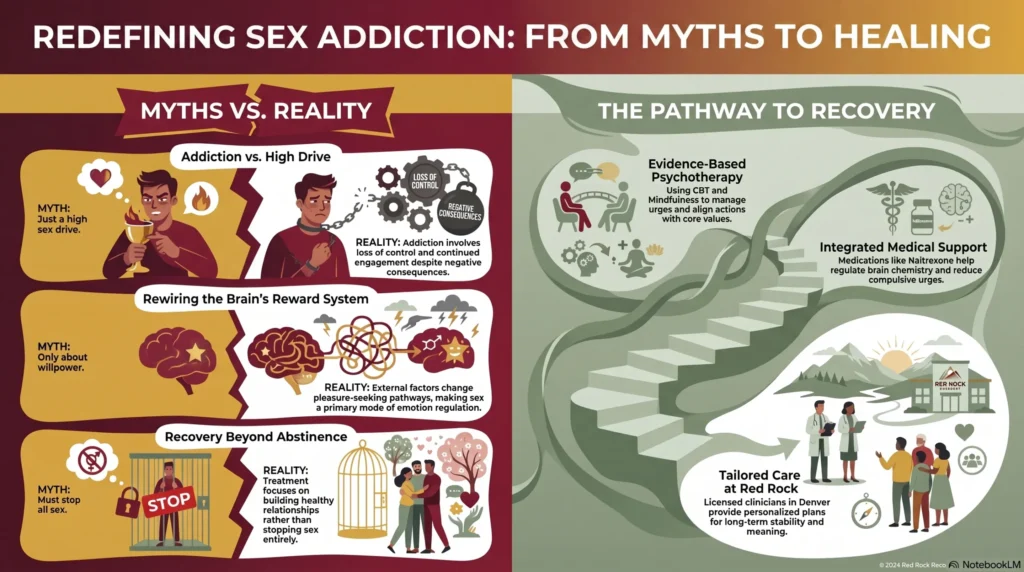
Wrong: Sex addiction is just having a high sex drive.
True: A sex addiction involves impulsivity, loss of control, continued engagement in sexual activity even when there are negative consequences, and cravings for sexual activity.
Wrong: Sex is something natural, and so sex addiction can’t be real.
True: Sex can be a rewarding act, but sex addiction can be caused by external factors that change reward and pleasure-seeking pathways, making it a primary mode of emotion regulation and therefore an addiction.
Wrong: Anyone with a sex addiction is a sex offender.
True: The majority of people with a sex addiction do not commit sex offenses, and the majority of people who commit sex offenses do not have a sex addiction.
Wrong: The only way to recover from sex addiction is to stop having sex completely.
True: Treatment for sex addiction does not focus only on abstinence; it looks at the causes and triggers of the addiction and provides a pathway to a healthy relationship with sex that suits the person’s goals and values.
Treatment for Sex Addiction
Treatment for sex addiction should be given by licensed medical professionals and tailored to the person receiving it. Most treatment integrates psychotherapy approaches, including:
- Cognitive Behavioral Therapy (CBT) to identify unhealthy behaviors and manage sexual urges.
- Acceptance and Commitment Therapy is used to create a plan for dealing with urges, which is typically built around the person’s core values.
- Mindfulness-based therapies to learn groundedness, manage difficult feelings, and lower anxiety.
Some treatments use medication alongside psychotherapy to treat sex addiction. These include:
- Antidepressants: To treat mental health disorders that may help reduce compulsive sexual behavior.
- Naltrexone: To help regulate the part of the brain that feels pleasure with certain addictive behaviors.
- Mood stabilizers: To assist in lowering compulsive sexual urges.
- Anti-androgens: To lessen the effect of sex hormones and compulsive sexual behavior.
Treatment for sex addiction is effective and widely accessible. After finishing a program, one man reported “a measurable difference in sexual urges. [He] wasn’t being triggered all the time” [9].
Change Is Possible. Join an Addiction Program at Red Rock Recovery, Denver
We offer treatment programs to help you recognize the root causes of sex addiction and to find long-term stability.
We have a team of licensed clinicians who tailor care to you based on your current needs and goals moving forward. Our center in Denver, Colorado, is a calm space where we provide evidence-based therapies, appropriate medication, and a range of holistic activities. Our care is comprehensive to ensure that you gain the skills to not only overcome addiction but also live a more meaningful life.
You deserve to feel better. Speak with our admissions team now.

Sources
[1] Mayo Clinic. (November 2022). Does society have a sex addiction problem?mayoclinichealthsystem.org.
[2] Chatzittofis, A. et al. (January 2022). Neurochemical and Hormonal Contributors to Compulsive Sexual Behavior Disorder. Current Addiction Reports.
[3] Eghwrudjakpor, PO. Essien, AA. (December 2008). Hypersexual Behavior Following Craniocerebral Trauma: An Experience with Five Cases. The Libyan Journal of Medicine.
[4] Oei, N. et al. (March 2012). Dopamine Modulates Reward System Activity During Subconscious Processing of Sexual Stimuli. Neuropsychopharmacology.
[5] Woo Park, J. et al. (October 2021). The Effect of Stress on Compulsive Sexual Behavior Disorder: Active Coping Strategy and Self-Control as Mediators. Psychiatry Investigation.
[6] Shimoni, L. et al. (October 2018). The contribution of personality factors and gender to ratings of sex addiction among men and women who use the Internet for sex purpose. Journal of Behavioral Addictions.
[7] Giordano, A. et al. (March 2004). Childhood trauma and sex addiction among adult men. Journal of Addictions & Offender Counseling.
[8] Gewirtz-Meydan, A. Godbout, N. (July 2023). Between pleasure, guilt, and dissociation: How trauma unfolds in the sexuality of childhood sexual abuse survivors. Child Abuse & Neglect.
[9] Bostwick, J. Bucci, J. (February 2008). Internet Sex Addiction Treated With Naltrexone. Mayo Clinic Proceedings.