

















If you’ve made the decision to detox from alcohol, you’ve taken the very first step in your recovery. Detox is the beginning stage in structured treatment for alcohol addiction, and involves safely withdrawing from alcohol and finding stability to continue moving through care.
Many people fear withdrawing from alcohol due to the symptoms — for some people this fear even perpetuates their alcohol abuse [1]. Naturally, you may want to know if you can detox at home, in a familiar environment. But detox from alcohol should be medically supervised in order to monitor your symptoms, help alleviate cravings, and ensure you have the strongest possible foundation to heal.
In this article, I explain why alcohol detox should take place in a treatment facility, and why that space supports better outcomes.
What Is Alcohol Detox?
Alcohol detox does not mean that you simply stop consuming alcohol. It’s a days-long process where you slowly remove alcohol from your system.
Detox serves people who have an alcohol use disorder (AUD), which arises from long periods and high consumption of alcohol. With an AUD, your body becomes dependent on alcohol to function. Detox is the initial step in a wider recovery journey to gradually let your body adjust to the absence of alcohol and still be able to carry out internal processes.
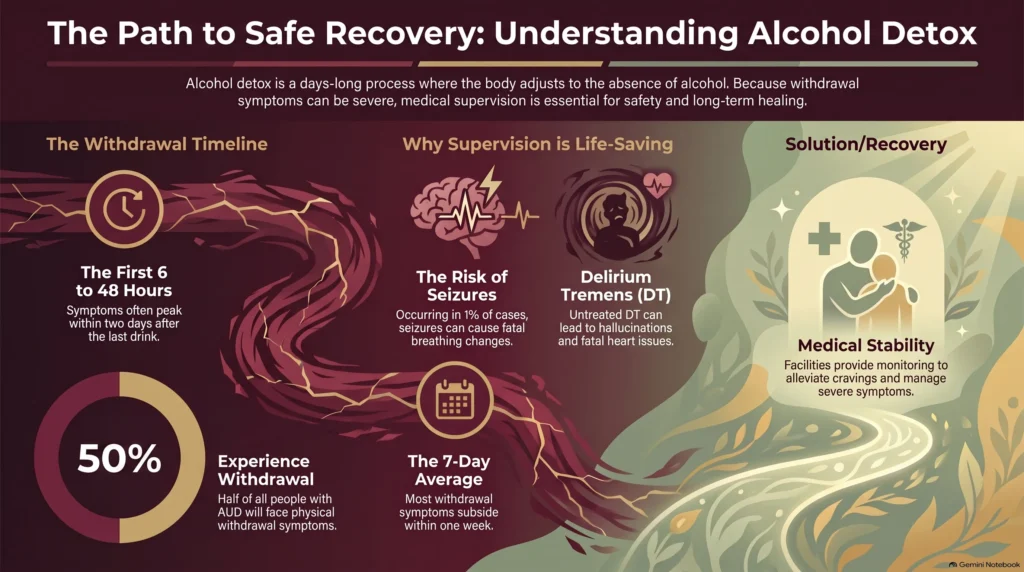
Alcohol detox also includes managing withdrawal symptoms that surface when you stop or lower your consumption of alcohol. Around half of all people with an AUD experience withdrawal symptoms [2].
What Are Alcohol Withdrawal Symptoms?
The most common alcohol withdrawal symptoms include:
| Cravings for alcohol | Loss of appetite |
| Low mood | Vomiting |
| Sweating | Heart palpitations |
| Anxiety | Fatigue |
| Headache | Insomnia |
| Irritability | Digestive problems |
Symptoms can manifest six hours after your last alcoholic drink. They peak within the first two days and subside afterward. On average, withdrawal lasts for seven days, but in extreme cases it can last for two weeks [3]. People who have been addicted to alcohol for a long time, and who have consumed high volumes of alcohol, are more likely to experience more severe withdrawal symptoms.
Less common, but more dangerous, alcohol withdrawal symptoms are seizures and Delirium Tremens (DT).
Seizures are rare: they affect 1% of people during the first day of withdrawal [4]. However, seizures can cause physical harm and changes in heart and breathing function that can cause death.
DT is a condition that leads to tremors (normally in the hands), hallucinations, and confusion. It impacts around 1% of people suffering from an alcohol addiction [5]. If DT is not treated, fatal heart and circulatory issues can happen.
What Are the Risks in Alcohol Detox?
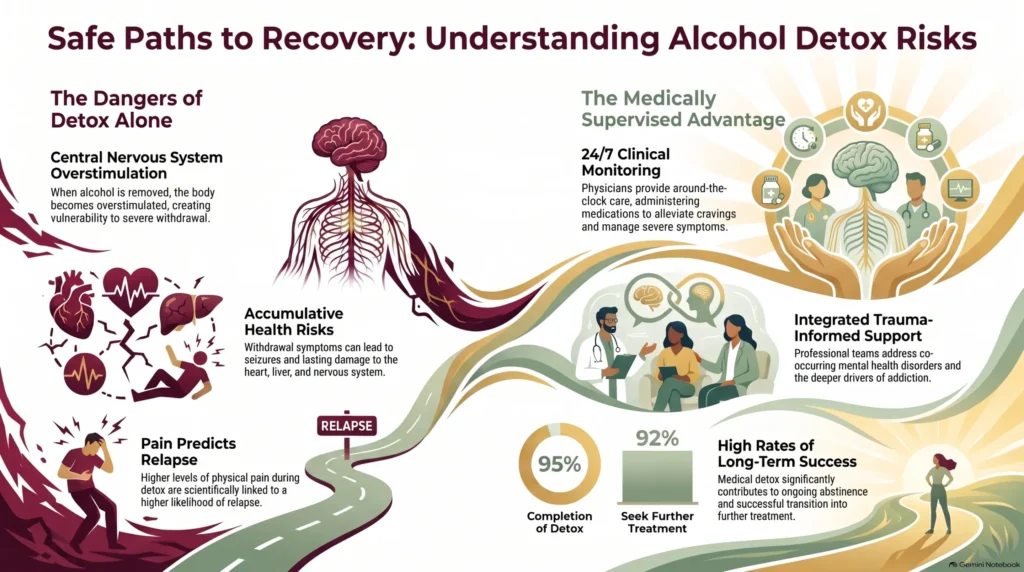
Alcohol is a depressant that slows your central nervous system down. When you detox, your body can’t immediately respond to the change and becomes overstimulated. During this time, you’re vulnerable to withdrawal symptoms and your overall health needs extra attention to be maintained.
If you have ever had a seizure in your life, you’re at greater risk of experiencing a seizure during detox. The accumulative effects of alcohol withdrawal symptoms can also lead to heart disease, liver disease, and central nervous system disease.
The intensity of your detox can be influenced by different factors such as:
- Age
- Existing health and mental conditions
- Other substance use disorders
- Body chemistry (e.g., liver function)
- Genetics and family history
- The duration and frequency of drinking
The reality is, detoxing from alcohol is uncomfortable, and for some people, it may be extremely distressing. Research has found that higher levels of pain during detox are associated with a higher likelihood of relapse [6].
Why Alcohol Detox Has to Be Medically Supervised
The risks that come with alcohol detox mean you should not detox from home. Medically supervised detox is not only safer, it’s more likely to help you successfully pass through the detox stage and move forward in your recovery.
Detox programs ensure that you have around-the-clock care from physicians who monitor and respond to your withdrawal symptoms and other possible health risks. They can administer medications to alleviate cravings and discomfort, and can identify factors that may make your detox more severe — including ones that you aren’t aware of.
With medically supervised detox, you’re kept in a clean, consistent, supported, and often private setting. At home, you don’t have access to potentially life-saving clinical resources, you have a higher risk of hurting yourself, and you may not have the discretion many people require to finish detox.
Medical detox equally gives you a team of professionals who keep a close eye on your mental state while you withdraw. Some programs have dedicated treatment for mental health disorders that co-occur with alcohol addiction, as well as holistic activities to help you emotionally regulate and develop practices that can carry you through detox and phases of recovery down the line.
Retention rates for medical detox are high: up to 95% of people complete detox and a further 92% seek treatment after finishing [7]. Research additionally shows that medical detox contributes to ongoing abstinence from alcohol [8].
Medical Detox at Red Rock Recovery, Denver
Our detox program for alcohol addiction helps you achieve sustained, healthy recovery. The program runs from our center in Morrison, CO, for 1-1.5 weeks and includes intake and assessment, medical stabilization, discharge planning, and psychological support. We also offer a residential rehab program that you can transition directly into after finishing detox.
We pride ourselves on being empathetic experts in addiction. We don’t judge, we simply provide a space and support team that genuinely contributes to your healing.
Our clinical team provides medication-assisted treatment (MAT) when needed, and all of our staff are trained in trauma, which often goes hand-in-hand with addiction. We manage your symptoms, but we also look at the deeper parts of you that drive alcohol use.
You’re not broken, and you don’t need to be fixed. But you do need help to heal. Start receiving it. Contact our admissions team today.

Sources
[1] Becker, H. (2008). Alcohol Dependence, Withdrawal, and Relapse. Alcohol Research & Health.
[2] National Institute on Alcohol Abuse and Alcoholism. (August 2025). Alcohol Use in the United States: Age Groups and Demographic Characteristics. niaaa.nih.gov.
[3] Jesse, S. et al. (2016 September). Alcohol withdrawal syndrome: mechanisms, manifestations, and management. Acta Neurologica Scandinavica.
[4] Maldonado, J. (November 2010). An Approach to the Patient with Substance Use and Abuse. Medical Clinics of North America.
[5] Cleveland Clinic. (June 2023). Delirium Tremens. my.clevelandclinic.org.
[6] Allen, J. et al. (July 2005). Fear during alcohol detoxification: views from the clients’ perspective. Journal of Health Psychology.
[7] Timko, C. et al. (May 2015). Patient and Program Factors that Bridge the Detoxification-Treatment Gap: A Structured Evidence Review. Journal of Substance Abuse Treatment.
[8] Quelch, D. et al. (June 2019). Elective alcohol detoxification – a resource and efficacy evaluation. Future Healthcare Journal.