

















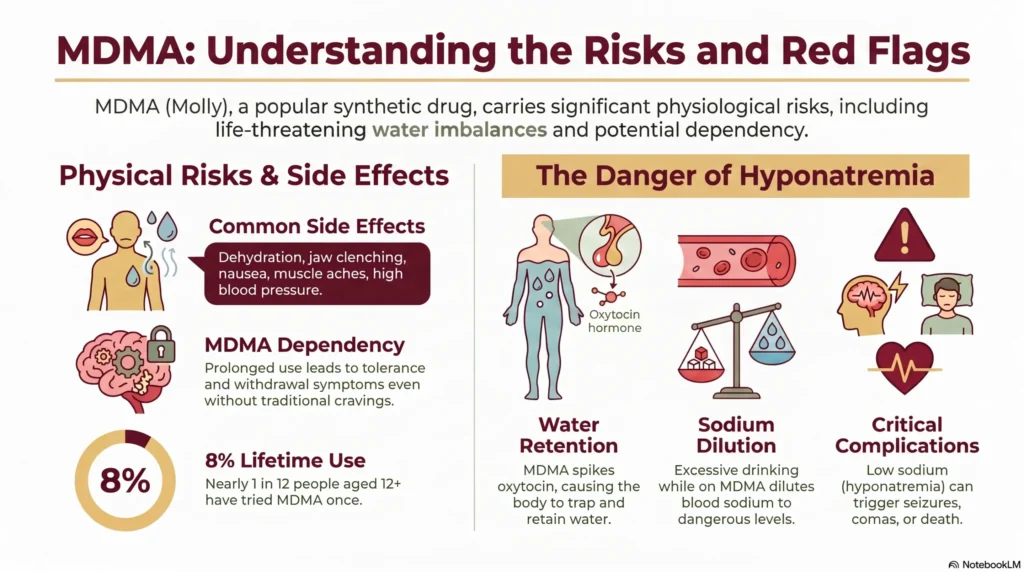
MDMA or Molly (3,4-Methylenedioxymethamphetamine) is a synthetic stimulant and hallucinogenic substance. It’s a popular party drug: nearly 8% of people aged 12 and above have tried MDMA at least once in their lives [1].
People take MDMA because of the feeling of euphoria and inhibition it produces. It has also increasingly been shown in TV and film scenes that are targeted toward younger generations.
But MDMA is not a harmless substance to try with friends once in a while. Its side effects can be dangerous, and it carries a risk of overdose. Knowing the symptoms of an overdose and how to treat stimulant misuse isn’t just helpful; it’s life-saving.
What Is MDMA?
MDMA is sometimes called ecstasy or Molly, and typically comes as a white chunky powder, as beige-colored crystals, or as colorful pills that have logos stamped on them. MDMA can be snorted, ingested, or smoked. It’s made in laboratories and produces an intense high by causing high levels of dopamine to be released. It’s sometimes called “the love drug” because it can make people feel romantic or sentimental toward others.
MDMA is mostly taken by younger people in social settings. One study found that all younger people, bisexual women, and asian, black, and multiracial people had increased odds for using MDMA [2].
What Are the Risks of Taking MDMA?
There are several side effects that can occur when taking MDMA; these include:
- Dehydration from sweating and overheating
- Grinding teeth and jaw clenching (known as ‘gurning’)
- Nausea and vomiting
- Muscle aches
- Higher blood pressure
- Paranoia
- Hypothermia
- Psychosis
Dehydration from MDMA is a serious risk. MDMA triggers a sharp spike in oxytocin, which causes the body to retain water, while also increasing thirst and impairing the kidneys’ ability to excrete free water. As people drink large amounts of water in response to the thirst, the water gets trapped in the body and dilutes the blood’s sodium concentration, known as hyponatremia. Hyponatremia induced by MDMA can lead to seizures, coma, and death [3].
Overdose is also a real risk when using MDMA. MDMA-related deaths have increased across various countries: in Norway alone, MDMA was detected in 142 fatalities between 2000 and 2019 [4]. Another case study in Canada found that a 21-year-old woman died after ingesting a fatal dose of MDMA [5].
It’s important to note that overdose deaths involving opioids, cocaine, and methamphetamine are substantially higher than those involving MDMA [6]; however, MDMA overdoses can, and do, happen.
Is MDMA Addictive?
MDMA is generally not considered addictive, but it can cause dependency. Dependency is what happens after taking MDMA for a prolonged period of time, where you require higher doses to feel the same effects as before. Dependency also means that you experience withdrawal symptoms if you suddenly stop or dramatically lower your use of the drug. Dependency doesn’t always mean you have cravings for MDMA.
Reports of MDMA dependency among young people have increased in recent years [7]. People who take MDMA regularly have also been shown to have the highest prevalence of substance use disorders for alcohol, marijuana, cocaine, and opioids [8].
What Does an MDMA Overdose Look Like?
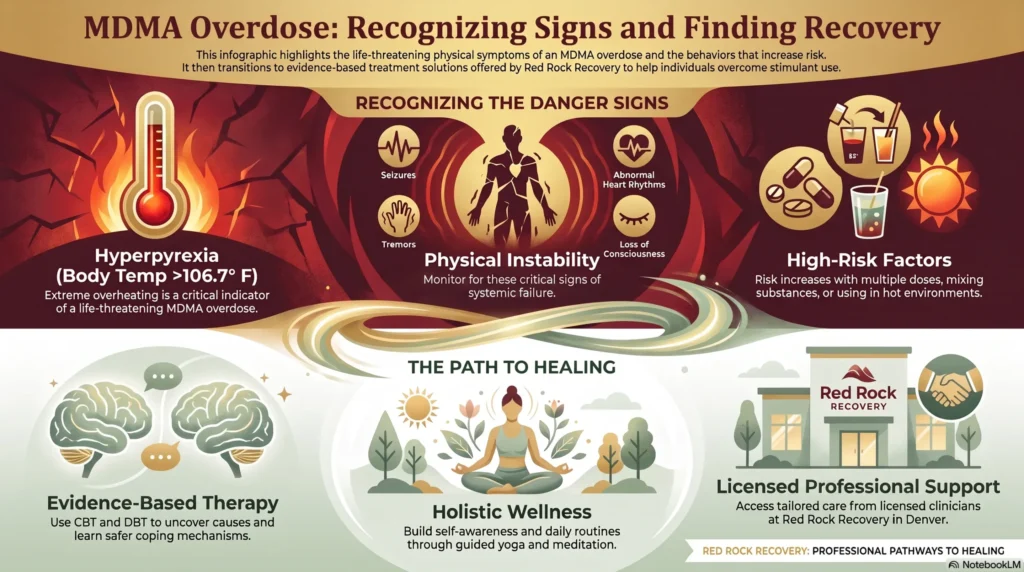
An MDMA overdose can be slow and subtle or sudden and scary. Signs include:
- Abnormal heart rate and rhythm
- Hyperpyrexia (when your body temperature reaches over 106.7° F)
- Seizures
- Tremors
- Unconsciousness
Factors that can increase the risk of overdosing with MDMA include:
- Consuming multiple doses of MDMA in a short space of time
- Taking several doses of MDMA at once
- Mixing MDMA with other substances, such as prescription drugs
- Doing too much exercise after taking MDMA
- Using MDMA in a very hot environment
If you think that you, or someone else, has overdosed on MDMA, immediately call 911 or go to the closest emergency room.
Treatment For Long-Term Healing From Stimulant Use
Whether you’re taking MDMA regularly or sparingly in tandem with a different addiction, there is a way out. A route to better health, happiness, and reconnecting with the hopes you’ve had for yourself. Stimulant use doesn’t have to be an ongoing part of your story.
Treatment programs for substances include evidence-based therapies such as Cognitive Behavioral Therapy (CBT) and Dialectical Behavioral Therapy (DBT) to help you uncover why you use substances and how to learn how to care for yourself in safer, more productive ways.
Programs also offer wellness activities such as yoga and meditation that ensure you build self-awareness and groundedness and establish daily routines free from drug use.
Treatment doesn’t just protect you from the real life-threatening risks of stimulants; it’s a genuine path to feeling more fulfilled and worthy in the world.
Change Is Possible. Start Addiction Treatment at Red Rock Recovery, Denver
We offer treatment programs to help you safely withdraw from substances, address the causes of addiction, and find long-term stability.
We have a team of licensed clinicians who tailor all care to you based on your current needs and goals moving forward. Our center in Denver, Colorado, is a calm space where we provide evidence-based therapies and a range of holistic activities. Our care is comprehensive to ensure that you gain the skills to not only overcome addiction but also live a more meaningful life.
You deserve to feel better. Speak with our admissions team now.

Sources
[1] Substance Abuse and Mental Health Services Administration. (February 2025). National Survey on Drug Use and Health (NSDUH). samhsa.gov.
[2] Yang, K. et al. (June 2024). Prevalence and Correlates of Past-Year Ecstasy/MDMA Use in the United States. Journal of Addiction Medicine.
[3] Elkattawy, S. et al. (May 2021). Methylenedioxymethamphetamine (MDMA)-Induced Hyponatremia: Case Report and Literature Review. Cureus.
[4] Jamt, R. et al. (May 2022). Deaths associated with MDMA in the period 2000-2019. Tidsskr Nor Laegeforen.
[5] Hoorn, E. (September 2001). A fatal case of Ecstasy poisoning. Paediatrics and Child Health.
[6] Tanz, L. et al. (August 2025). Drug Overdose Deaths Involving Stimulants ― United States, January 2018–June 2024. Center for Disease Control.
[7] Jansen, K. (January 1999). Ecstasy (MDMA) dependence. Drug and Alcohol Dependence.
[8] Wu, L. et al. (April 2009). The high prevalence of substance use disorders among recent MDMA users compared with other drug users: implications for intervention. Addictive Behaviors.