

















Opioids, stimulants, alcohol, gabapentinoids, and antihistamines can cause itching during withdrawal. Withdrawal happens when you have been using a substance for a long time and suddenly stop or dramatically lower the amount you take. Withdrawal is one of the earliest stages of recovery.
For many people, withdrawal is uncomfortable, but not life-threatening. Nonetheless, fearing withdrawal is one of the main reasons why people don’t seek treatment for addiction [1]. Having a clear idea of what to expect in withdrawal can help you prepare and feel reassured that you can do it, and continue forward in your healing.
Let’s take a look at what drugs cause itching during withdrawal, including why it happens and how to manage it.
What Is Withdrawal?
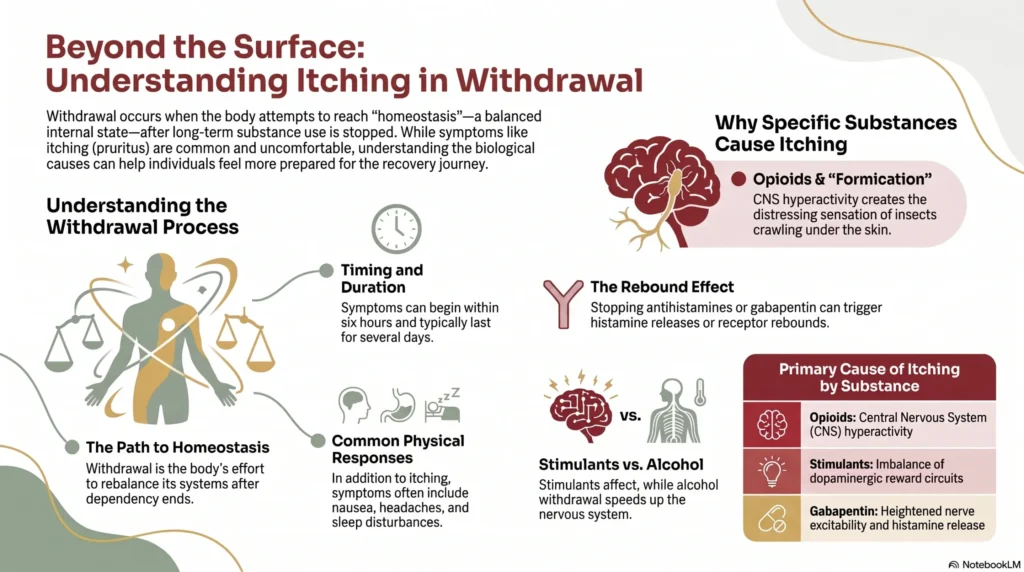
Withdrawal takes place during detox, when you safely remove substances from your system. It happens when your body has become dependent on a substance after a long period of use. In withdrawal, your body tries to adapt to the absence of the substance and to reach a state of homeostasis, which is when your internal systems are balanced again.
Withdrawal looks different depending on the substance, but symptoms can start to show as soon as six hours after your last consumption of a substance. Withdrawal symptoms typically last for a few days, but in severe cases, they can last weeks or even have residual effects for months.
Common withdrawal symptoms include:
- Itching
- Nausea and vomiting
- Headache
- Sweating and shaking
- Confusion
- Problems sleeping
- Irritability
- Mood swings
Itching (‘pruritus’ in medical terms) doesn’t happen in withdrawal for all substances, but it’s common, and often intense, among opioid, stimulant, alcohol, and gabapentinoid users. It also manifests in people who use antihistamines on a long-term basis.
Drugs That Cause Itching During Withdrawal
There are a few substances that cause itching during withdrawal, but the effect and severity of the itching are different for each one.
Opioids
Opioids such as heroin, fentanyl, morphine, and oxycodone can cause itching during withdrawal. More specifically, they cause ‘formication’ which is the sensation of insects crawling underneath the skin. This happens because the central nervous system becomes hyperactive during withdrawal.
It can be very distressing, and the severity and duration of formication depend on how long the person has used opioids, what opioid(s) they have used, and if they have any other health conditions.
Itching is a common side effect of taking opioids, however, formication is specific to withdrawal.
Stimulants
Reports show that people regularly taking cocaine, MDMA, and medications for ADHD, such as Adderall, have experienced itching when lowering or stopping use [2]. In some cases, itching has been similar to ‘formication’, where people feel infestation–like sensations below the skin. It’s believed the feeling comes from an activation and imbalance of dopaminergic reward circuits and receptors in the brain.
Alcohol
Alcohol is a depressant, and when someone stops drinking after a long time of heavy use, the central nervous system speeds up. The increase in activity can cause skin sensitivity, including itching.
Itching is a less common withdrawal symptom for alcohol addiction and is generally harmless. If itching occurs with other symptoms such as jaundice, it can be an indication of a more serious condition due to liver damage.
Gabapentin
Gabapentin is an anticonvulsant prescription medication. It works by reducing nerve excitability, and if a course of it is abruptly stopped, it can heighten sensitivity, making minor skin sensations feel intensely itchy. Withdrawal can also trigger the release of histamines that act on skin nerve endings, contributing to the feeling of itchiness.
Gradually tapering off gabapentin can lower or remove itching as a withdrawal symptom.
Antihistamines
Ironically, over-the-counter antihistamine drugs can cause itching when stopping after long-term use. The FDA recently put out a warning stating that cetirizine and levocetirizine produced itching — sometimes requiring medical intervention — after using the medication for months [3]. The reason could be that the body’s histamine receptors undergo a ‘rebound’ effect when consumption stops, leading to itchiness.
What Causes Itching in Withdrawal?
There’s no one cause for itching during withdrawal. Just as the degree and risk of itching varies for different drugs, the reason for itching can vary.
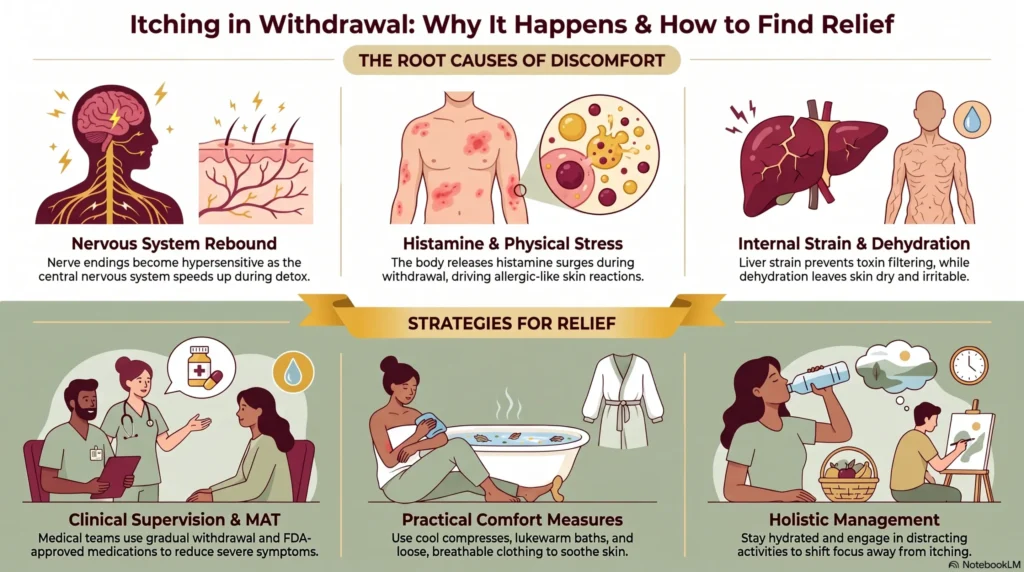
Nervous system rebound. Opioids and alcohol slow activity in the central nervous system, and during withdrawal, the system overcompensates and speeds up, making nerve endings hypersensitive.
Surges in histamine. The body can release a surge of histamines during withdrawal because of the physical stress of detox. Histamines can drive allergic reactions that cause bodily itching.
Liver damage. During withdrawal from alcohol, liver strain can reduce the organ’s ability to filter toxins that build up in the skin and cause deep, chronic itching.
Dehydration. Substance use and sweating during withdrawal can leave you dehydrated. As a result, skin is drier and more irritable, which can cause itchy sensations.
How to Manage Itching in Withdrawal
Withdrawal should always take place under medical supervision, and a care team can alleviate any itching you experience. They will also carry out the withdrawal gradually, in order to reduce the risk of you experiencing itching in the first place. Steps to manage itching include:
- Adding a cool compress to the affected area(s)
- Applying anti-itch creams
- Taking a lukewarm bath
- Wearing loose, breathable clothing
- Staying hydrated
- Doing activities to distract from the itching
In severe cases, addiction centers may offer Medication-Assisted Treatment (MAT), which uses controlled, FDA-approved drugs to reduce withdrawal symptoms such as formication.
Start Your Recovery Safely at Red Rock Recovery, Denver
Our addiction treatment programs include detox, where we help you safely withdraw from substances and start your journey to long-term stability.
Our team of licensed clinicians tailors care for you based on your current needs and goals moving forward. We offer Medication-Assisted Treatment (MAT) for severe cases and a range of holistic activities to help balance your mental and spiritual health as your physical health improves.
Our center in Denver, Colorado, is a calm space to heal and gain the skills to not only overcome addiction but also live a more meaningful life.
You deserve to feel better. Speak with our admissions team now.

Sources
[1] Arun, P. et al. (July 2004). A Study of Reasons for not Seeking Treatment for Substance Abuse in Community. Indian Journal of Psychiatry.
[2] Lipman, Z. Yosipovitch, G. (January 2021). Substance use disorders and chronic itch. Journal of the American Academy of Dermatology.
[3] Us Food & Drug Administration. (April 2026). FDA requires warning about rare but severe itching after stopping long-term use of oral allergy medicines cetirizine or levocetirizine (Zyrtec, Xyzal, and other trade names). fda.gov.