

















The conversation of drug use is often oriented around the effects on health, and while that topic has to be a priority, addiction recovery also needs to include how public safety is impacted. Public safety considers both those directly and indirectly affected by substance use and the wider drug trade.
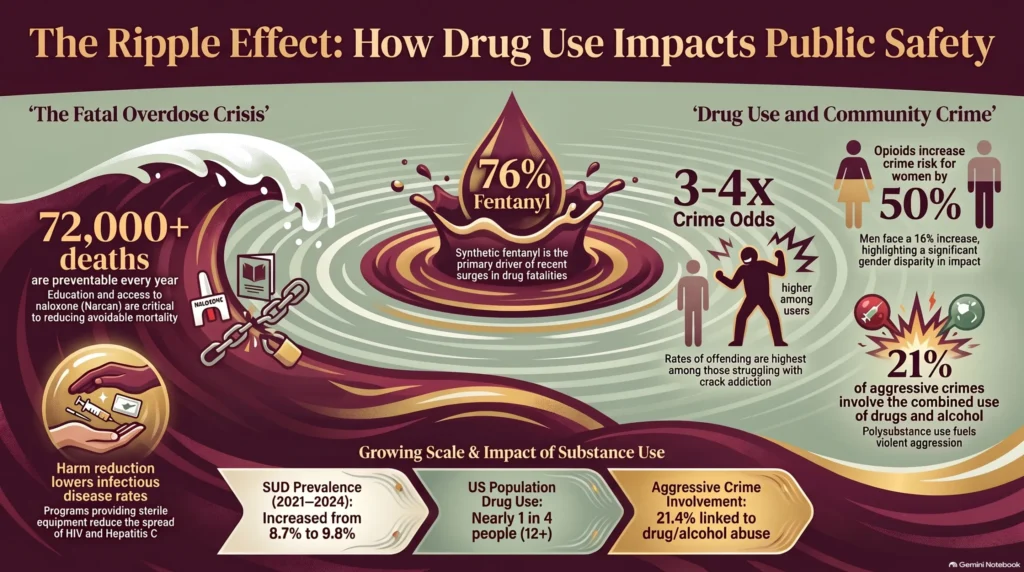
Drug use, both recreationally and as part of an addiction, has been increasing. Nearly a quarter of the US population aged 12 and over has used illegal drugs or misused prescription drugs [1]. Meanwhile, between 2021 and 2024, the percentage of people aged 12 or over with a substance use disorder (SUD) increased from 8.7% to 9.8% [2].
How does drug use ripple through other groups and structures in society? And what threats does drug use pose to overall perceptions of public safety? Let’s explore.
Fatal Overdoses
Higher drug use rates are correlated to increased fatal overdoses. Recent data shows that drug fatalities have declined in the US, but they rose considerably before and during the Covid-19 pandemic. The increase was largely due to the influx of synthetic fentanyl, which accounted for up to 76% of all overdose deaths in 2023 [3].
Fatal overdoses are very often avoidable. Medications such as naloxone (Narcan) — which reverses an opioid overdose — are life-saving and widely accessible. Education around such medications is still lacking, though, especially among active drug users who are at highest risk of overdose. Estimates suggest that more than 72,000 preventable drug overdose deaths occurred in the US alone in 2024 [4].
Fatal overdoses have also raised calls for better harm reduction efforts, including counseling on safer drug use, providing sterile drug use equipment, drug testing strips, and options for referrals to social support resources [5]. Research repeatedly highlights how harm reduction not only reduces mortality rates but also contributes to a decline in drug-related infectious diseases such as HIV and hepatitis C [6].
Increase in Crime
Research shows the odds of committing a crime are three to four times higher among drug users than non-users. The type of drug matters: rates of offending are highest among people with an addiction to crack and are lowest among people who use drugs recreationally [7]. Sex also plays a role: for example, men are 16% more likely to be involved in a crime after using opioids, whereas women are 50% more likely [8].
There are many factors that connect drug use and an increase in crime. People may seek money to pay for substances, especially highly addictive ones such as crack and opioids. Certain drugs such as methamphetamine also cause an increase in aggression and violent tendencies, especially when combined with other substances such as alcohol. One study found 21.4% of aggressive crime was committed by people who had abused drugs and alcohol at the same time [9].
On a wider scale, drug manufacturing and trafficking contributes significantly to increases in crime. Turf wars, transport, and localized sales come with illegal activity, often including exploitation and violence.
Counterfeit Supply
Synthetic drugs, such as fentanyl, are increasingly being made to look like authentic prescription medications. These are typically targeted toward younger people, who want to get prescription drugs to improve how they study or to experiment socially.
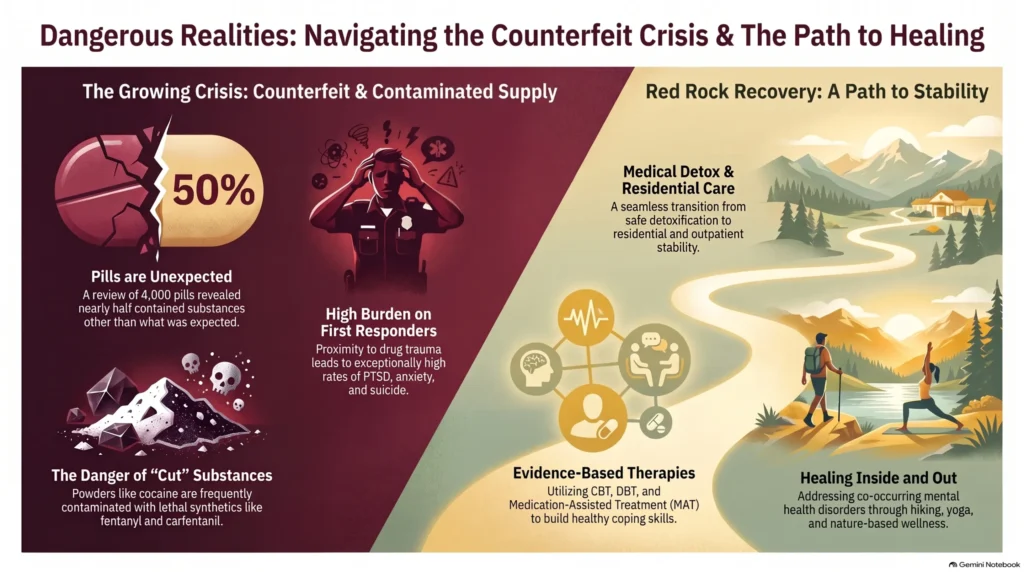
A review of approximately 4,000 pills in British Columbia revealed that nearly half contained unexpected substances [10]. Not only does the counterfeit supply mean people can accidentally take a highly potent substance without knowing it and potentially become addicted, there is also a risk of overdose.
Drugs that come in powder form, such as cocaine, can be “cut” with other substances to make the amount larger and cheaper to produce. Additions can include non-harmful substances such as caffeine, numbing agents, and baking soda, as well as dangerous substances such as fentanyl and methamphetamines. In Argentina, in 2022, 23 people died and over 80 were hospitalized after taking cocaine contaminated with carfentanil, a synthetic opioid [11].
Risk to First Responders
Paramedics, police officers, firefighters, and other first responders are normally the first people to interact with drug users in their most vulnerable state. Whether an overdose, a psychotic break, or a threat of self-harm, first responders experience high levels of stress and trauma as a result of their proximity to drug use.
In fact, mental health disorders such as depression, anxiety, and PTSD are exceptionally high among this group of workers, largely due to the psychological burden they carry [12]. First responders also have elevated rates of suicide compared to the general public [13].
First responders are at risk of developing their own substance use disorders as a way of coping with the mental load of their job. Being exposed to communities, places, and scenes that include drug use can heighten this risk further.
There’s the physical safety of first responders to consider, too. When attending to emergencies involving drugs, workers may encounter used needles and chemicals that can be passively inhaled — which can transmit serious illnesses and alter workers’ state.
Substance Use Disorder Treatment at Red Rock Recovery, Colorado
At Red Rock Recovery, we’re a team of licensed medical professionals who don’t judge — we just offer empathetic care to overcome addiction and understand the drivers behind it.
From our center in Morrison, Colorado, we provide treatment including medical detox to safely remove drugs and alcohol from the body and to find the stability to continue through care and achieve sobriety. We also have residential care and outpatient programs, so patients can seamlessly transition when ready.
We use evidence-based therapies, including Cognitive Behavioral Therapy (CBT) and Dialectical Behavioral Therapy (DBT), to support the development of healthy coping skills and emotional regulation. We also have medication-assisted treatment (MAT) available where clinically appropriate to alleviate withdrawal symptoms, cravings, and reduce the risk of relapse.
We treat co-occurring mental health disorders, including anxiety and depression. We host wellness activities such as hiking and yoga in the beautiful nature surrounding our center to ensure anyone struggling with addiction heals both inside and out.
Take a step forward. Speak with our admissions team today.

Sources
[1] National Center for Drug Abuse Statistics. 2025. Drug Abuse Statistics. drugabusestatistics.org.
[2] SAMHSA. 2025. Annual National Survey on Drug Use and Health. samhsa.gov.
[3] CDC. 2026. About Overdose Prevention. cdc.gov.
[4] NSC Injury Facts. 2026. Drug Overdoses. injuryfacts.nsc.org.
[5] Griffin. J. et al. 2025. Substance Use Harm Reduction in Medical Care. Johns Hopkins University.
[6] Pridgen, B. et al. 2025. U.S. substance use harm reduction efforts: a review of the current state of policy, policy barriers, and recommendations. Harm Reduction Journal.
[7] Bennett, T. et al. 2008. The statistical association between drug misuse and crime: A meta-analysis. Aggression and Violent Behavior.
[8] Pierce, M. et al. 2017. Insights into the link between drug use and criminality: Lifetime offending of criminally-active opiate users. Drug and Alcohol Dependence.
[9] Rafaiee, R. et al. 2013. The Relationship Between the Type of Crime and Drugs in Addicted Prisoners in Zahedan Central Prison. International Journal of High Risk Behaviors and Addiction.
[10] Friedman, J. Ciccarone, D. 2025. The public health risks of counterfeit pills. The Lancet Public Health.
[11] El País. 2022. Cocaine that killed at least 23 in Argentina was mixed with powerful opiate. elpais.com.
[12] Padmanabhanunni, A. et al. 2025. An exploratory study of the mental health of first responders: depression, anxiety, and post-traumatic stress disorder. South African Journal of Psychology.
[13] CDC. 2021. Suicides Among First Responders: A Call to Action. cdc.gov.