

















Recreational drugs are legal and illegal substances people take for pleasure or to relax. They are not taken under medical guidance, and how they’re used goes against medical advice.
Around the world, 331 million people use drugs recreationally. Cannabis is the most popular, followed by opioids, amphetamines, cocaine, and ecstasy [1]. The reasons why people consume drugs for recreational purposes, and how they take them vary significantly. What is consistent is the potential harm that comes from regular drug use.
Let’s look at what exactly recreational drug use is, what the effects are, and what treatment is available to help when addiction develops.
Examples of Recreational Drugs
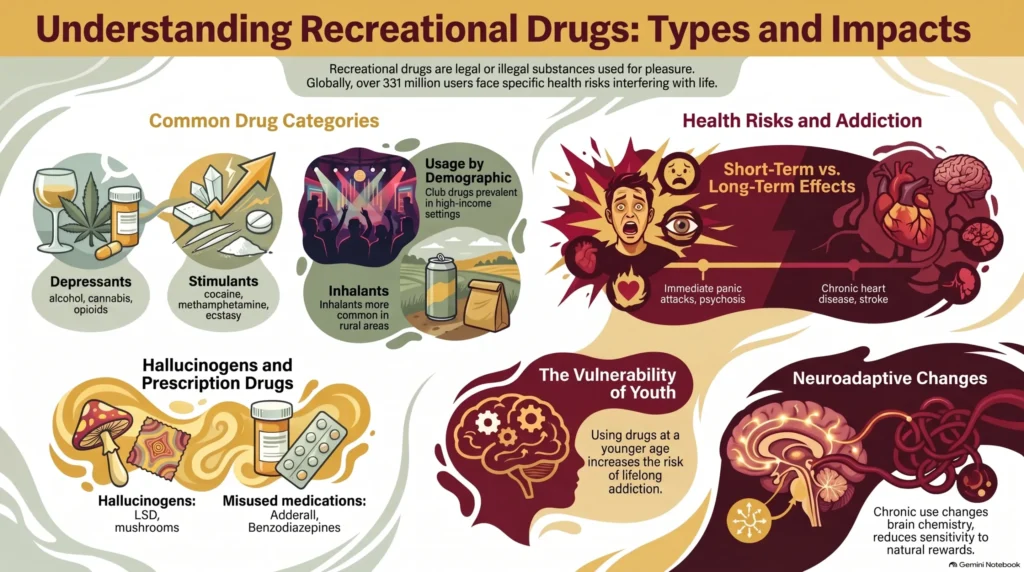
Recreational drugs generally fall into four categories: depressants, stimulants, hallucinogens, and prescription drugs.
Depressants include:
- Alcohol
- Cannabis
- Opioids
Stimulants include:
- Cocaine
- Methamphetamine
- Ecstasy
Hallucinogens include:
- LSD
- Mushrooms
Prescription drugs include:
- Benzodiazepines
- Adderall
- Ritalin
According to the National Center for Drug Abuse Statistics, club drugs (substances consumed in nightclubs and bars) including ecstasy, meth, cocaine, ketamine, LSD, and GHB, are mostly used in higher-income settings by young people. Meanwhile, inhalants (substances breathed in) are mostly used by lower-income adults, adolescents, and people living in rural areas [2].
What Are the Effects of Recreational Drug Use?
Recreational drug use can have serious negative effects on health and quality of life. The effects differ depending on the type of drug, how often it’s used, and other factors such as pre-existing health conditions, genetics, and age. However, general health effects of recreational drug use can be split into short-term and long-term and include:
Short-term effects:
- Nausea
- Dehydration
- Vomiting
- Teeth grinding
- Digestive problems
- Panic attacks
- Psychosis
Long-term effects:
- Addiction
- Insomnia
- Mental health disorders
- Heart disease
- Stroke
- Cancer
Taking recreational drugs with alcohol can heighten the risk of the effects above.
Recreational drug use can interfere with daily functioning, causing a drop in performance at work or school, problems in relationships, and a loss of interest in activities that once felt fulfilling.
Not everyone who takes recreational drugs will develop an addiction. In fact, only a small percentage of people who try recreational drugs end up with a substance use disorder (SUD). However, studies show how using drugs from a younger age increases the risk of lifelong addiction because the habit-forming region of the brain is activated earlier [3]. Considering young adults have the highest rates of drug use, they are particularly vulnerable to addiction.
Research also shows the psychoactive properties of some recreational drugs contribute to the onset of addiction. For example, chronic exposure to opioids leads to neuroadaptive changes, which can reduce sensitivity to natural rewards and fuels dependence [4].
Reasons People Take Drugs Recreationally
One study of high school seniors from 1976 to 2005 found recreational reasons were the most commonly reported for using drugs. More specifically, seniors said they used drugs “to get high”, “to have a good time with friends”, “to experiment”, “to fit in”, and “because of boredom” [5].
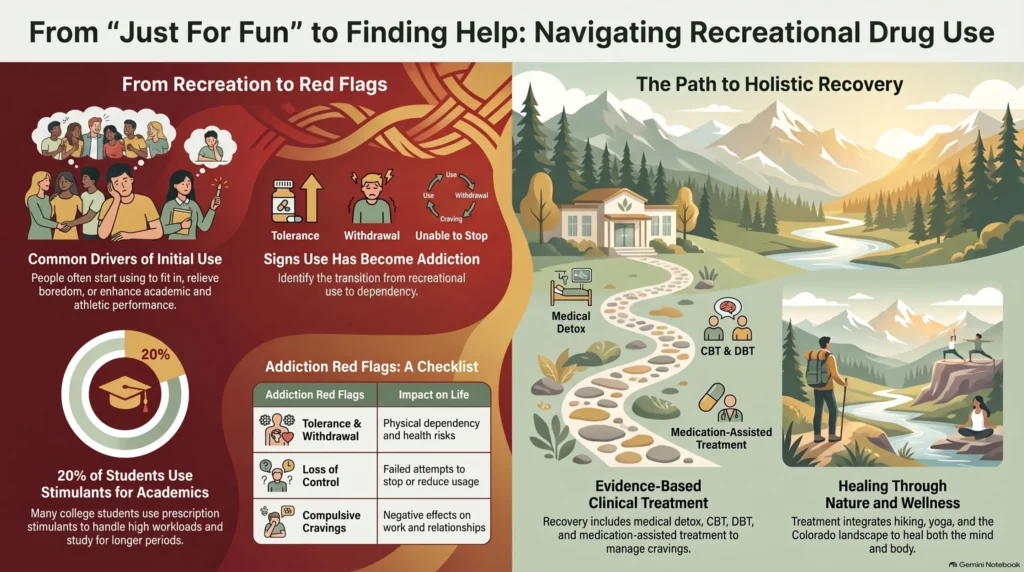
Another reason that has been surfacing more in recent years is taking drugs recreationally to enhance performance. People may take stimulants to help with high academic workloads, sports, or to improve confidence in social situations. Estimates suggest up to 20% of college students use prescription stimulants for things like being able to study for longer periods of time [6].
Recreational use can also be used as a form of stress relief or to cope with difficult emotions. In these cases, if a person is self-medicating with recreational drugs, they have a high risk of developing an addiction, as drug use can become an instinctive coping mechanism for feelings such as sadness and shame.
When Does Recreational Use Become an Addiction?
Anyone can become addicted to recreational drugs. For some people, addiction can happen quickly, after little use. For others, it develops more slowly, after extensive use. There’s no specific amount of drug use that defines an addiction, but the following characteristics are red flags:
- Experiencing withdrawal symptoms when reducing or stopping recreational drug use
- Trying to stop using recreational drugs and being unable to do so
- Using higher doses, more often than planned
- Needing more of the drug to achieve the same effects as previously (building tolerance)
- Continuing to use recreational drugs despite negative effects on health, work, and relationships
- Craving recreational drugs
Addiction to recreational drugs can have life-threatening outcomes. The trouble with identifying addiction within this drug group is knowing when socially accepted behaviors become a deeper issue that requires treatment. Seeking help at the earliest sign of uncontrolled consumption not only addresses addiction before it worsens, but it also looks at the causes that lie beneath.
Recreational Drug Addiction Treatment at Red Rock Recovery, Colorado
We know that a one-off experimental drug experience can influence longer-term reality. At Red Rock Recovery, we’re a team of licensed medical professionals who don’t judge—we just offer empathetic care to overcome addiction and understand the drivers behind it.
From our center in Morrison, Colorado, we provide treatment spanning medical detox, residential care, and outpatient programs. We use evidence-based therapies such as Cognitive Behavioral Therapy (CBT) and Dialectical Behavioral Therapy (DBT) to support you as you develop healthier coping skills, as well as medication-assisted treatment (MAT) to alleviate withdrawal symptoms and cravings.
We also treat co-occurring mental health disorders, including anxiety and depression. We host wellness activities such as hiking and yoga, and make the most of the beautiful nature surrounding our center to ensure you heal both inside and out.
When you’re ready to take a step forward, get in touch with us.
Sources
[1] United Nations. 2026. UNODC World Drug Report 2026: Global drug markets transforming rapidly as technology, novel drug types and instability present traffickers with new opportunities. unodc.org.
[2] National Center for Drug Abuse Statistics. 2025. Drug Abuse Statistics. drugabusestatistics.org.
[3] Jordan, C. Andersen, S. 2017. Sensitive periods of substance abuse: Early risk for the transition to dependence. Developmental Cognitive Neuroscience.
[4] Abrar Zaman, M. et al. 2025. Recreational Drugs Addiction, Withdrawal and its Impact on the body: A Literature Review. European Society of Medicine.
[5] Terry-McElrath, Y. et al. 2010. Reasons for Drug Use among American Youth by Consumption Level, Gender, and Race/Ethnicity: 1976–2005. Journal of Drug Issues.
[6] Benson, K. et al. 2015. Misuse of Stimulant Medication Among College Students: A Comprehensive Review and Meta-analysis. Clinical Child and Family Psychology Review.