

















There’s no set amount of alcohol that causes withdrawal symptoms. What produces withdrawal is when a person is addicted to alcohol and has built dependency on it, meaning their biological processes have become used to the presence of alcohol in order to function. When alcohol is dramatically lowered or removed, the biological process needs time to recalibrate — this is when withdrawal occurs.
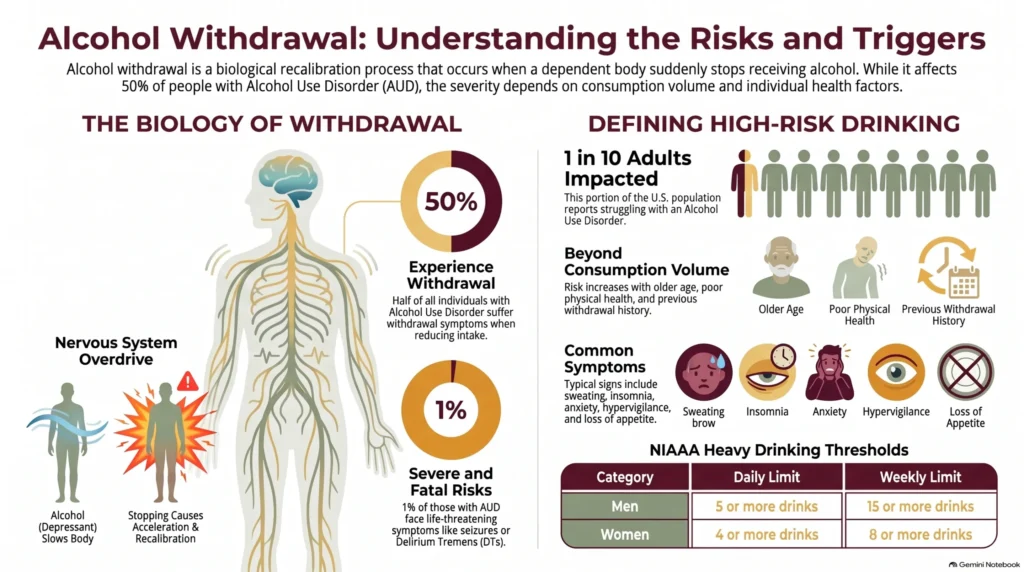
In the U.S., 1 in 10 people report having an alcohol use disorder (AUD) [1]. This type of addiction is characterized by having cravings for alcohol, not being able to cut back or stop drinking, and needing more alcohol to achieve the same effects as previously. Half of all people with AUD experience withdrawal when they reduce their alcohol intake [2].
In this article, I explain the link between AUD and withdrawal symptoms, and the parameters for heavy drinking that can lead to AUD.
What Is Alcohol Withdrawal?
Alcohol withdrawal happens when a person stops consuming alcohol or when they significantly reduce their consumption after long-term use. It involves physical and mental symptoms that can last for days or weeks.
During alcohol withdrawal, the body tries to achieve homeostasis, where internal processes are regulated. Because alcohol is a depressant, it slows the central nervous system, and processes have to work much harder to function while someone is heavily drinking alcohol. When they stop drinking, though, the nervous system is in overdrive, and has to recalibrate to a steadier pace. The shift in speed is what causes withdrawal symptoms.
Alcohol withdrawal symptoms include:
- Vomiting
- Sweating
- Insomnia
- Anxiety
- Hypervigilance
- Loss of appetite
Alcohol Withdrawal Delirium (AWD), commonly known as Delirium Tremens (DTs), and seizures are more severe alcohol withdrawal symptoms. These affect around 1% of the population with AUD, and can be fatal [3] [4].
Does AUD Cause Alcohol Withdrawal?
Anyone who consumes large amounts of alcohol over a long period is more likely to experience alcohol withdrawal and with more severe symptoms for a longer time. People without an addiction can go through withdrawal, but having AUD is the strongest preindicator of withdrawal.
There are no specific consumption volumes that define AUD, but the National Institute on Alcohol Abuse and Alcoholism qualifies heavy drinking as [5]:
Men
- 5 or more drinks per day
- 15 or more drinks per week
Women
- 4 or more drinks per day
- 8 or more drinks per week
Other factors which increase the chance of experiencing alcohol withdrawal include:
- Heavy daily alcohol consumption
- Previous withdrawal experiences
- Older age
- Co-occurring medical or mental health issues
- Poor physical health
How Long Does Alcohol Stay in the Body?
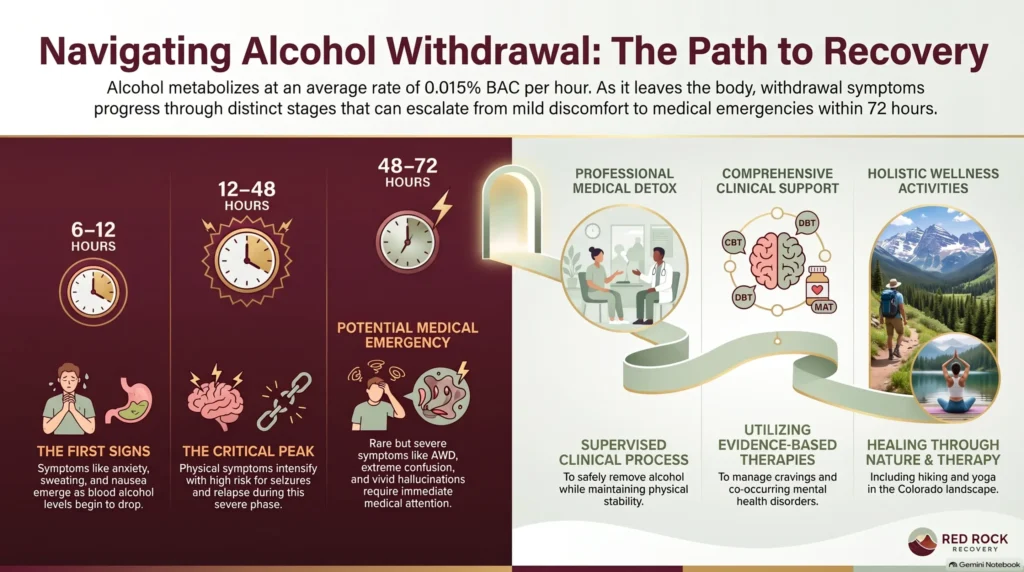
Metabolization — how the body breaks down and eliminates alcohol — mostly takes place in the liver, which can only process small amounts of alcohol at a time. On average, it metabolizes 0.015% blood alcohol concentration per hour, which is the same as about one alcoholic drink per hour.
Two enzymes in the liver, alcohol dehydrogenase (ADH) and aldehyde dehydrogenase (ALDH), metabolize alcohol into water and carbon dioxide, which is then expelled through urine and breathing. Alcohol can be detected in urine around 12 hours after drinking alcohol [6].
How quickly alcohol is metabolized influences when withdrawal starts, how long it lasts, and how intense withdrawal symptoms are.
What Does Alcohol Withdrawal Look Like?
Withdrawal is different for each person and can be shaped by how long they’ve been drinking, what they drink, and how often. That said, this is a general outline of how alcohol withdrawal unfolds in the first three days:
6-12 hours
Withdrawal symptoms start to surface, even as blood alcohol is still dropping. People may mistake this phase for a bad hangover.
Symptoms include:
- Anxiety
- Sweating
- Nausea
- Problems sleeping
- A racing heart
Someone with a mild alcohol dependence may find this time to be the most difficult. Someone with heavier alcohol use may experience this as the beginning of a more challenging journey.
12-24 hours
Symptoms intensify and complications may begin to arise. Hallucinosis may occur, and seizures may happen.
For many people, this period and the following day is the highest risk for relapse.
24-48 hours
Known as the “peak”, physical symptoms are most severe at this time and include:
- Heavy sweating
- Elevated heart rate
- Tremors
- Seizures
The body is under the most strain and people report feeling most discomfort in this phase.
48-72 hours
AWD may emerge, manifesting as:
- Fever
- Heavy sweating
- Severe confusion and disorientation
- Extreme agitation
- Vivid hallucinations
AWD is a break from reality and is a medical emergency. However, it is a rare phenomenon in alcohol withdrawal.
Alcohol Addiction Treatment at Red Rock Recovery, Colorado
At Red Rock Recovery, we’re a team of licensed medical professionals who do not judge. We offer empathetic care to overcome alcohol addiction and understand the drivers behind it.
From our center in Morrison, Colorado, we provide treatment including medical detox to safely remove alcohol from your system, and to find the stability to continue through care, and achieve sobriety. We also have residential care and outpatient programs, so you can seamlessly transition when you’re ready.
We use evidence-based therapies, including Cognitive Behavioral Therapy (CBT) and Dialectical Behavioral Therapy (DBT) to support you as you develop healthy coping skills and emotional regulation. We also have medication-assisted treatment (MAT) to alleviate withdrawal symptoms and cravings, and to reduce the risk of relapse.
We treat co-occurring mental health disorders, including anxiety and depression. We host wellness activities such as hiking and yoga in the beautiful nature surrounding our center to ensure you heal both inside and out.
Take a step forward. Speak with our admissions team today.

Sources
[1] National Institute on Alcohol Abuse and Alcoholism. 2025. Alcohol Use Disorder (AUD) in the United States: Age Groups and Demographic Characteristics. niaaa.nih.gov.
[2] Canver, B. et al. 2024. Alcohol Withdrawal Syndrome. StatPearls [Internet].
[3] Cleveland Clinic. 2023. Delirium Tremens. my.clevelandclinic.org.
[4] Maldonado, J. 2010. An Approach to the Patient with Substance Use and Abuse. Medical Clinics of North America.
[5] National Institute on Alcohol Abuse and Alcoholism. 2026. Understanding Alcohol Drinking Patterns. niaaa.nih.gov.
[6] National Institute on Alcohol Abuse and Alcoholism. 2025. Alcohol Metabolism. niaaa.nih.gov.