


















There is no universal benzo detox timeline. Most people benefit from a slow, stepwise taper that adjusts every few weeks. Short-term use may resolve in one to two months, while long-term or high-dose cases often require several months or more. Safer reductions usually start at 5 to 10 percent every two to four weeks, with smaller cuts near the end. Comfort, safety, and function, not speed, should guide the pace [3][5].
Benzodiazepines can help in the short term, for anxiety, sleep, panic, or seizures, but when taken daily for weeks or months, your body adapts. That adaptation is called physical dependence, and it means that stopping suddenly can trigger withdrawal. Detoxing from benzos is not about quitting cold turkey. It is about tapering safely, protecting sleep and function, and avoiding complications like seizures.
This article breaks down how long benzo detox takes, why slow tapering is the standard of care, and how to manage symptoms with support.
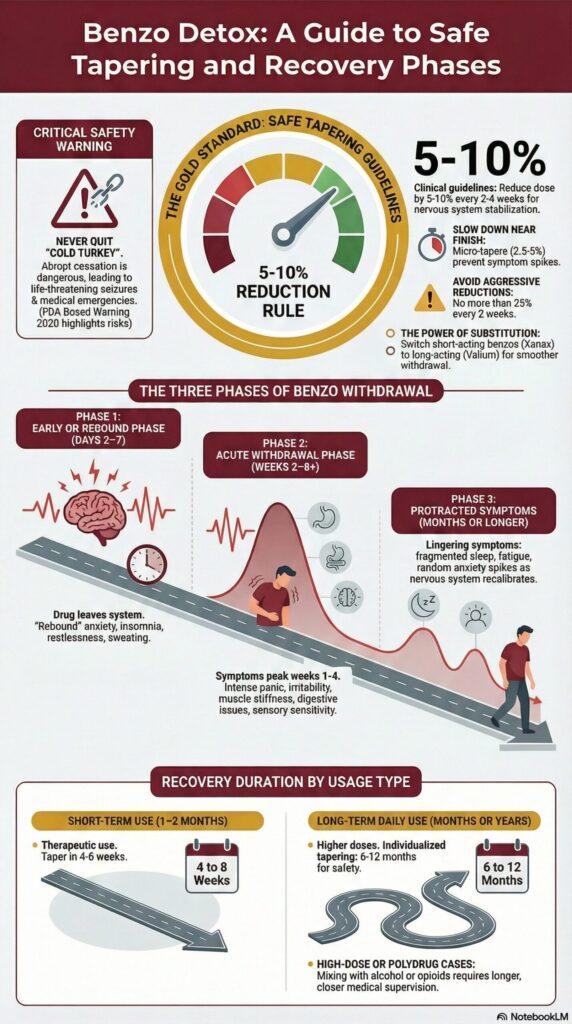
Safety First: Why You Should Not Stop Benzos Abruptly
Stopping benzodiazepines suddenly after regular use can be dangerous. It may lead to seizures, hallucinations, or medical emergencies, even if you felt fine the day before. If you are considering tapering or stopping, speak with a medical provider who understands benzos. In the United States, you can call SAMHSA’s National Helpline at 1-800-662-HELP for guidance and referrals [1].
Why There Is No One-Size-Fits-All Benzo Detox Timeline
People want a clear answer: how long will this take? The truth is, benzo detox follows the person, not a fixed calendar.
Some people taper off a short-term prescription in four to eight weeks. Others may need six months or more, especially if the dose was high, used for years, or mixed with other sedatives. According to recent clinical guidelines, many tapers begin with 5 to 10 percent dose reductions every two to four weeks, slowing the pace if symptoms spike. Cuts larger than 25 percent every two weeks are not recommended [3][5].
The point is not to rush, it is to finish well. Comfort, safety, and daily functioning matter more than speed.
What Detox Means for Benzos (It Is Not Cold Turkey)
With alcohol or opioids, detox often means clearing the substance from the body over days. For benzodiazepines, “detox” means something else: a planned, gradual taper that helps your nervous system re-adapt without crashing.
This is because benzos work on the GABA system, calming brain activity. Long-term use leads the brain to adjust, lowering natural GABA production or receptor sensitivity. Remove the drug too quickly, and your nervous system gets overwhelmed. That is why abrupt stops can cause seizures, panic attacks, or dangerous agitation [2][3][6].
Safe tapering allows your body to recalibrate slowly. Inpatient or residential detox is reserved for high-risk cases, like people with seizure history, polydrug use, or unstable health.
Why Slow Tapers Are the Standard of Care
In 2020, the FDA added a Boxed Warning to all benzodiazepines, acknowledging the real risks of dependence, withdrawal, and misuse. The message was clear: do not stop suddenly after weeks or months of use [2].
Major medical guidelines now recommend starting with small reductions, 5 to 10 percent of the current dose every two to four weeks. As the dose gets lower, the cuts often get smaller. In some cases, people use micro-tapers, reducing by just 2.5 to 5 percent at a time. Pausing is also normal. If symptoms increase, the plan holds steady until things stabilize [3][5].
Three Phases of Benzo Withdrawal
1. Early or Rebound Phase (2 to 7 days)
This phase begins as the drug leaves your system. With short-acting benzos like alprazolam or lorazepam, symptoms may appear within 8 to 24 hours. For longer-acting benzos like diazepam or clonazepam, it may take up to 72 hours [6][10].
Common symptoms in this stage include:
- Rebound anxiety or insomnia
- Restlessness, sweating, or mild tremor
- Heightened alertness or tension
Tapering slowly, especially with longer-acting substitutes, can soften this phase [6][9].
2. Acute Withdrawal Phase (2 to 8+ weeks)
This is the most symptomatic part of withdrawal. Symptoms tend to peak in weeks one to four and may gradually ease by six to eight weeks.
What to expect:
- Intense anxiety, insomnia, or panic
- Irritability, mood swings
- Muscle stiffness, twitching, or headaches
- Digestive issues
- Difficulty concentrating
- Sensory sensitivity (light, sound)
- Low mood or depersonalization
Seizures are rare in gradual tapers but remain a risk with fast reductions or co-use with alcohol or opioids [6][9].
3. Protracted Symptoms (Months or Longer in a Subset of People)
Some people experience lingering symptoms, called protracted withdrawal, for weeks or months after finishing a taper. This does not mean the damage is permanent. It means the nervous system is still recalibrating.
Common lingering symptoms:
- Fragmented sleep
- Random spikes in anxiety
- Trouble focusing
- Fatigue or low motivation
The good news? These symptoms often improve with time, structure, and support. CBT, sleep therapy, and exercise can help the nervous system rebuild [6][10].
So… How Long Does Benzo Detox Really Take?
There is no single answer. The length depends on your dose, duration, coexisting conditions, and goals. Here is what current research and clinical experience show:
Short-term use (1 to 2 months)
People using benzos therapeutically for a few weeks may complete a taper in 4 to 8 weeks, especially if the dose was low and there are no other complicating factors [6][8].
Long-term daily use (months or years)
For daily users, especially those on higher doses or taking multiple medications, individualized tapers over 6 to 12 months are common. The slower the taper, the better tolerated it often is [3][5].
High-dose or polydrug cases
When benzodiazepines are used with opioids or alcohol, or when doses are unusually high, detox may take significantly longer, with closer supervision. Safety is the first priority, not speed [2][6].
What Makes Some Tapers Shorter or Longer?
- Medication type and half-life
Short-acting drugs like alprazolam (Xanax) or lorazepam (Ativan) tend to produce sharper withdrawals if stopped too fast. Substituting to longer-acting agents like diazepam (Valium) can help smooth the process [5][6].
- Individual health factors
Age, metabolism, liver health, co-occurring anxiety or PTSD, and medical complexity all affect the taper pace. Older adults often need slower schedules and extra support [3][6].
- Concurrent substances
Using alcohol, “Z-drugs” (like zolpidem), or opioids adds risk. These combinations complicate the taper and increase the chance of dangerous symptoms [2][6].
- Support systems and tools
People who combine tapering with CBT, sleep skills, stress regulation, exercise, and structured routines tend to tolerate reductions better and recover faster [7].
What the Guidelines Say
- ASAM Clinical Guideline (2025): Start with 5 to 10 percent dose reductions every 2 to 4 weeks. Pause or slow if symptoms rise. Avoid cutting more than 25 percent at a time. Choose level of care based on individual risk [3].
- American Academy of Family Physicians (AAFP): Either direct taper or substitute to diazepam, based on patient profile. Use shared decision-making to set pace. Adjunct medications only as needed for primary diagnoses [5].
- NICE CKS (UK): Individualize the plan. Go slow. Use non-drug skills to support function. Plateau if symptoms flare [6].
What About Rapid Detox or Flumazenil Infusions?
Rapid protocols (under 8 to 12 weeks) may be too fast for outpatient care. They increase the risk of severe withdrawal, relapse, or hospitalization. These are generally reserved for medically monitored settings [3][6].
Flumazenil, a benzodiazepine reversal drug, is sometimes proposed for detox. However, its use in tapering is controversial. Risks include seizures and limited evidence for long-term benefit. Major guidelines do not recommend it as a routine detox strategy [3].
What a Supportive Benzo Taper Actually Looks Like
- Set your “why” and define goals: Why are you tapering? What matters most, sleep, parenting, work, anxiety reduction? Your taper should fit your life.
- Start slow: Most plans begin with 5 to 10 percent cuts. When doses get lower, smaller steps (2.5 to 5 percent) may feel more manageable.
- Cross-taper if needed: Some people benefit from switching to a longer-acting medication like diazepam to avoid withdrawal between doses [5][6].
- Layer in skills early: CBT for anxiety and insomnia, stress-reduction techniques, light exercise, and mindfulness can make tapering much easier [7].
- Use meds strategically: Treat underlying conditions (GAD, depression, seizures) with appropriate medications. There is no magic pill for withdrawal, but support matters [5][6].
- Expect plateaus: If symptoms rise, hold the dose steady. Success is about stability, not fast progress [3].
Common Symptoms During Benzo Withdrawal
Why they happen: Benzos increase GABA activity, your brain’s calming signal. With long-term use, your body pulls back on GABA sensitivity. When the drug is reduced, that inhibition drops, and the nervous system becomes overactive.
Most reported symptoms include:
- Anxiety or panic
- Insomnia or restless sleep
- Muscle tightness, tremors, twitching
- Headaches, digestive upset
- Brain fog, memory lapses
- Light and sound sensitivity
Seizures or hallucinations are rare when tapering slowly under supervision—but they remain the most dangerous risks of stopping suddenly [6][9].
Frequently Asked Questions
How soon do symptoms start after reducing or stopping?
Short-acting medications like alprazolam or lorazepam may bring symptoms within 8 to 24 hours. Long-acting ones like diazepam or clonazepam may take 1 to 3 days [6].
How long does the acute phase usually last?
Most people report peak symptoms during weeks one to four, with gradual relief by weeks six to eight. Going slower during the final stages helps reduce setbacks [3][6].
Do I have to switch to diazepam?
No. Direct tapers using very small reductions can also work. However, substitution can help if you experience withdrawal between doses on shorter-acting medications [5][6].
Is there a medication that prevents withdrawal?
There is no universal withdrawal blocker. However, treatment for underlying conditions (like anxiety, PTSD, seizures, or depression) can help reduce the need for benzodiazepines and make tapering easier [5][6].
Can I do a fast detox or an infusion that resets my brain?
Fast tapers carry more risk, especially outside inpatient care. Flumazenil infusions are not routinely recommended and carry seizure risk in dependent individuals [3].
Glossary
Rebound: Temporary return of symptoms (like anxiety or insomnia) after a dose is reduced. Often lasts a few days and improves with stabilization [10].
Interdose withdrawal: Symptoms that appear between doses, especially with short-acting medications. Switching to longer-acting agents can reduce this [6].
Micro-taper: A tapering method that involves very small reductions, typically 2.5 to 5 percent per step. Often used during the final stages of tapering [3].
Find Safe, Personalized Detox Support at Red Rock Recovery
At Red Rock Recovery, we know that benzodiazepine detox is not about quitting overnight, it is about restoring your safety, sleep, and confidence. Our physician-led team builds tapering plans that match your goals, pace, and needs. From outpatient support to residential programs, we meet you where you are and walk with you every step of the way.
Start your journey today. Reach out for a confidential assessment.
Sources
[1] Substance Abuse and Mental Health Services Administration. National Helpline (1-800-662-HELP). Bethesda (MD): SAMHSA; 2025. Available from: https://www.samhsa.gov/find-help/helplines
[2] U.S. Food and Drug Administration. Boxed Warning Updated to Improve Safe Use of Benzodiazepines. Silver Spring (MD): FDA; 2020. Available from: https://www.fda.gov/drugs/drug-safety-and-availability/fda-requiring-boxed-warning-updated-improve-safe-use-benzodiazepine-drug-class
[3] American Society of Addiction Medicine (ASAM). Joint Clinical Practice Guideline on Benzodiazepine Tapering. Rockville (MD): ASAM; 2025. Available from: https://downloads.asam.org/sitefinity-production-blobs/docs/default-source/guidelines/benzodiazepine-tapering-2025/bzd-tapering-document—final-approved-version-for-distribution-02-28-25.pdf
[4] ASAM. Tapering Benzodiazepine Medications: A Guide for Patients. Rockville (MD): ASAM; 2025. Available from: https://downloads.asam.org/sitefinity-production-blobs/docs/default-source/guidelines/benzodiazepine-tapering-2025/designed_tapering-benzodiazepine-medications-v3-final-patient-directed.pdf
[5] American Academy of Family Physicians. Tapering Patients Off of Benzodiazepines. Leawood (KS): AAFP; 2017. Available from: https://www.aafp.org/pubs/afp/issues/2017/1101/p606.html
[6] National Institute for Health and Care Excellence (NICE). Benzodiazepine and Z-drug Withdrawal (CKS). London (UK): NICE; 2024. Available from: https://cks.nice.org.uk/topics/benzodiazepine-z-drug-withdrawal/
[7] Oregon Health Authority. How to Approach a Benzodiazepine Taper. Portland (OR): Oregon Health Authority; 2023. Available from: https://www.oregon.gov/oha/HPA/DSI-Pharmacy/MHCAGDocs/Tapering-Benzodiazepines.pdf
[8] Cleveland Clinic. Benzodiazepines: Uses, Side Effects and Risks. Cleveland (OH): Cleveland Clinic; 2024. Available from: https://my.clevelandclinic.org/health/treatments/24570-benzodiazepines-benzos
[9] Cleveland Clinic Journal of Medicine. Reducing the Risks When Using Benzodiazepines. 2024. Available from: https://www.ccjm.org/content/91/5/293
[10] Pétursson H. The Benzodiazepine Withdrawal Syndrome. Acta Psychiatr Scand. 1994;89(1):22-27. Available from: https://pubmed.ncbi.nlm.nih.gov/7841856/